Art-Historical Timeline
The Blanton Vases in Greek Art History
Beginning of the Archaic Period
Vase painting in the Archaic period saw the first forays into figural decoration on Greek pottery. It is often divided into two phases, the earlier (ca. 700-600 BCE, frequently called "Orientalizing") being strongly influencd from the Eastern Mediterranean and Middle East, and a later (ca. 600-480 BCE) that more closely resembles the Classical period that follows it.
Black-Figure Technique Invented in Corinth
In Corinth, painters begin to decorate their pottery with black slip figures on an un-painted background in the natural color of the clay. The preferred subjects at Corinth included animals, mythical beasts, and floral designs.
Athenian Painters Adopt the Black-Figure Technique
Vase painters in Athens, which was to become the most important center of Greek vase-painting, begin to use the black-figure technique. The Athenians preferred human scenes, particularly from myth.
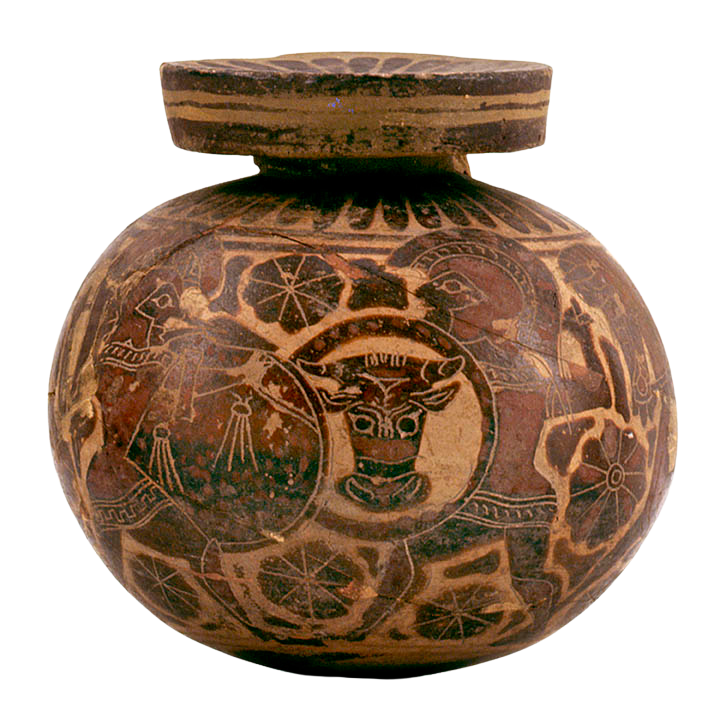
Early Corinthian Round Aryballos
1980.37
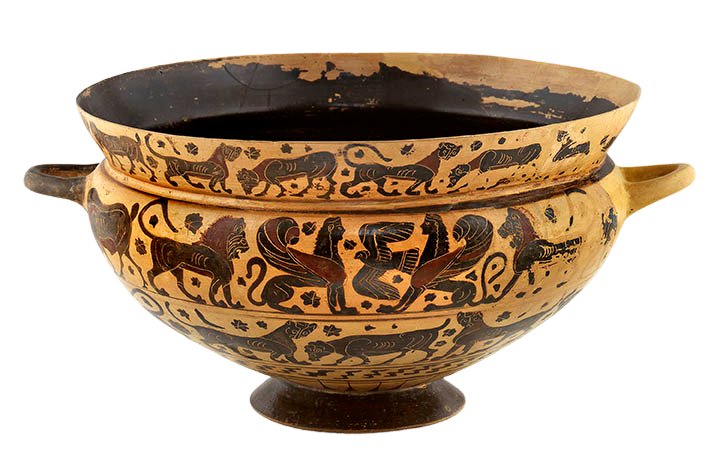
Middle Corinthian Stemless Kylix
1984.39
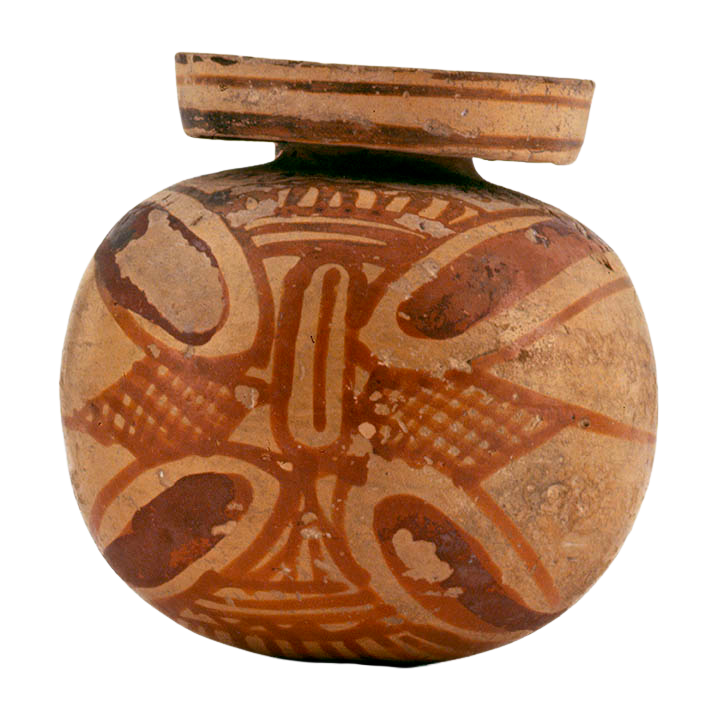
Late Corinthian Round Aryballos
1980.36
First Red-Figure Vases Painted in Athens
Athenian vase painters innovate a new form of figural decoration by reversing the black figure technique, painting the background in black slip and leaving the figures the natural red color of the clay. Details of the figures were added with fine black-slip lines.
Beginning of the Classical Period
The Classical Period, generally considered to be the artistic peak of Attic (Athenian) vase painting, is typically considered to extend from the Persian sack of Athens in 480 BCE and the death of Alexander in 323 BCE.
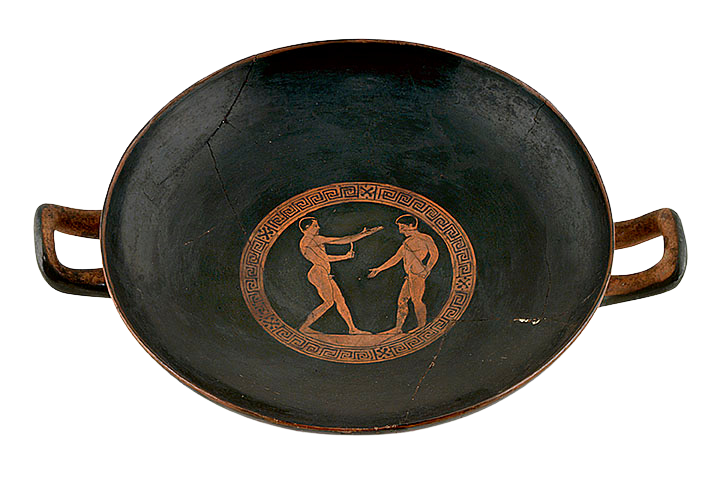
Red-Figure Kylix Type B
1980.42
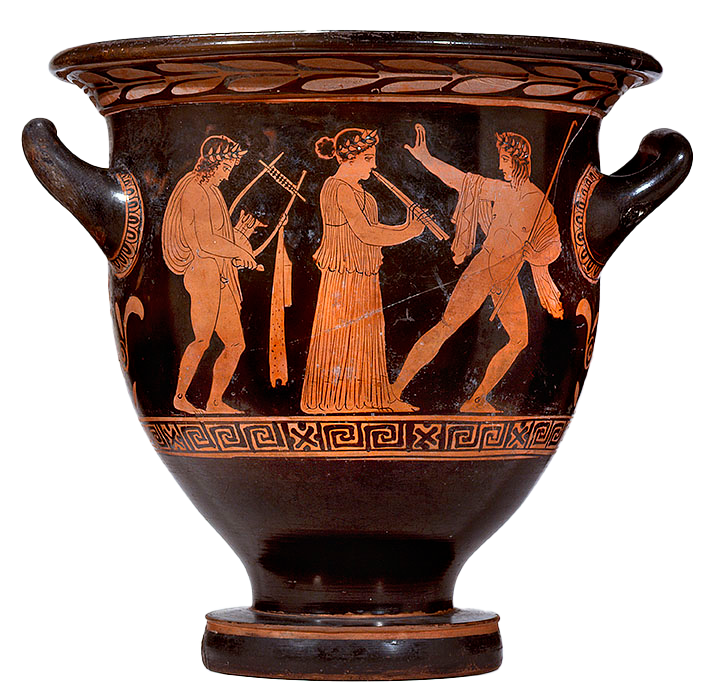
Red-Figure Bell Krater
1980.40
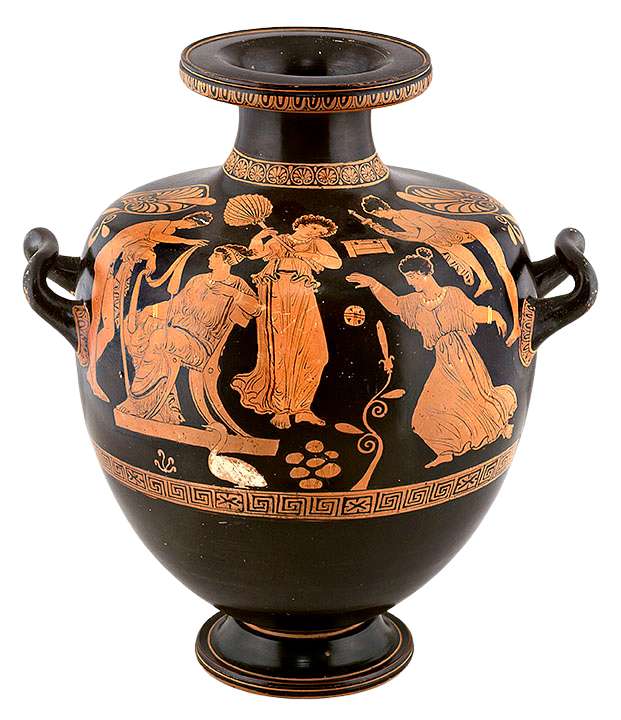
Red-Figure Calpis
1980.61
Beginning of the Hellenistic Period
This period, beginning with the death of Alexander the Great in 323 BCE, is defined by the spread of Greek language and culture around the Mediterranean and the Middle East following Alexander's campaigns. One characteristic of Hellenistic vase painting is the rising popularity of polychrome (multi-colored) painted vases, like the Lebes Gamikos in the Blanton collection.
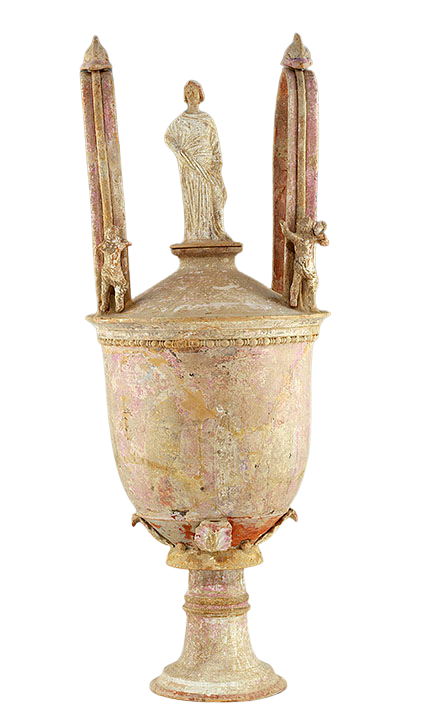
Polychrome Lebes Gamikos
1981.48